The photography representing your business shapes how customers perceive your brand, products and services. Whether those images appear on a website, in advertising, on social media or in a corporate presentation, they influence the impression your business makes.
But hiring a commercial photographer involves more than finding someone with an attractive portfolio. Different assignments require different expertise. A photographer who excels at executive portraits may not have the lighting, styling or production experience needed for product photography, hospitality interiors or a major automotive event.
The right choice begins with understanding what the photographs need to accomplish, followed by evaluating creative experience, production capabilities, pricing and usage rights.
Start With Your Business Objectives
Before contacting photographers, determine how the images will support your business. A professional services company may need executive portraits, team photographs and workplace imagery that establish credibility. A hospitality brand may need food, interiors and lifestyle photography that communicates the guest experience. An automotive business may require detailed product images, vehicle photography or event coverage.
Develop a brief identifying your target audience, intended uses, preferred visual style and essential deliverables. If the photography will support a website redesign or advertising campaign, involve the design team early. A beautiful photograph may be difficult to use if it doesn't accommodate responsive layouts, headlines or mobile crops.
Evaluate Relevant Experience, Not Just Portfolio Quality
A strong portfolio is important, but relevance matters more than the number of impressive photographs. Ask to see complete projects similar to your assignment.
For product photography, examine how materials, textures, reflections and colors are represented. For corporate portraits, look for natural expressions, consistent lighting and subjects who appear comfortable. For hospitality, consider how effectively the photographer captures food, atmosphere and interior spaces. For events, look beyond dramatic highlights: capable coverage includes important moments, people and details.
Ask who created the work and who will lead your assignment. Larger production studios may use different photographers, assistants and retouchers.
Match the Photographer's Specialty to Your Needs
Commercial photography encompasses several disciplines.
Corporate and branding photography includes executive portraits, team imagery, workplace photography and visual storytelling. These assignments require an understanding of professional environments and brand positioning.
Product and e-commerce photography requires controlled lighting, precise composition, consistent backgrounds and accurate representation of products.
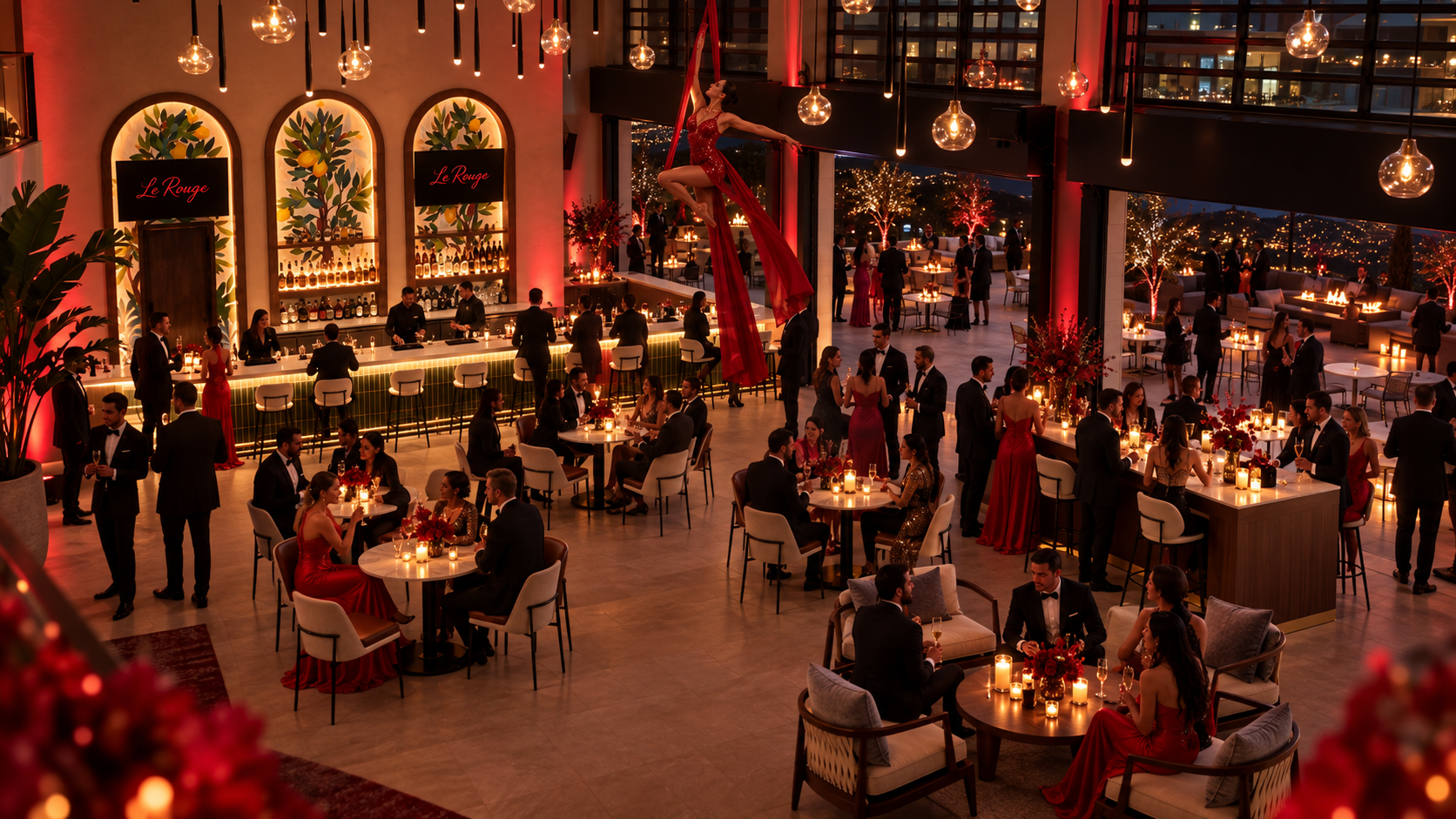
Hospitality and food photography combines creative styling with operational timing. Food preparation, natural lighting and guest service schedules all influence production. See our food and beverage photography work for the kind of imagery used in hospitality marketing.
Automotive photography involves reflective surfaces, specialized lighting, location planning and, in some cases, moving vehicles.
Event photography requires anticipation, adaptability and an understanding of the event schedule. Important moments often cannot be recreated.
A multidisciplinary creative studio can be useful when a campaign requires several types of photography, but confirm that the proposed team has experience in each area.
Understand the Photographer's Production Process
Professional photography begins well before the camera comes out. Ask how the photographer approaches planning, location selection, lighting, shot lists and production schedules.
For a restaurant, that may mean coordinating with the kitchen and scheduling photography around service. For a corporate assignment, it may involve preparing locations and arranging staff availability. For an event, it means understanding the program, identifying essential moments and securing necessary access.
Clarify whether the photographer provides assistants, styling, props, models or specialized equipment. For larger assignments, request a production schedule and a designated point of contact.
Many commercial venues require photographers and production companies to carry liability insurance and provide a certificate of insurance. Confirm venue-specific requirements before the shoot.
If the assignment includes commercial drone photography or video in the United States, confirm that the operator holds the required FAA Remote Pilot Certificate under Part 107 and that the proposed flight complies with applicable airspace and operational restrictions.
Preparation reduces delays and helps ensure the final images meet the creative brief.
Compare Complete Proposals, Not Just Day Rates
Photography pricing varies with the scope and complexity of the assignment. A proposal may include planning, shooting time, crew, equipment, travel, location expenses, post-production and licensing. Two estimates that appear similar may include very different deliverables.
Before making a decision, clarify:
The number of final edited images
Shooting hours and production schedule
Equipment, assistants and other production expenses
Retouching and revision allowances
Travel, overtime and cancellation terms
Image licensing and permitted uses
Delivery timelines and file formats
The lowest initial quote isn't always the most economical choice. An incomplete production plan or missing deliverables can result in additional expenses, reshoots and delays. Compare proposals against the same requirements so you understand the actual value of each offer.
Clarify Image Licensing and Usage Rights
In the United States, the photographer generally owns the copyright to photographs they create unless an applicable exception applies or ownership is transferred through a valid written agreement. Hiring and paying a photographer does not, by itself, transfer copyright ownership. Businesses typically receive a license defining how the images may be used. Work-made-for-hire rules and other exceptions can affect the result.
A written agreement should explain whether images may appear on websites, social media, paid advertisements, printed materials, packaging, publications or third-party promotional channels. Clarify the duration of the license, geographic limitations, exclusivity and permissions for editing or redistribution.
If recognizable people or private locations appear in the photographs, discuss the releases and permissions needed for the intended uses.
The agreement should also address emerging AI-related uses. Clarify whether photographs may be used to train AI models, whether generative AI tools may be used during retouching and whether substantially altered imagery requires client approval.
Understanding licensing before production protects both parties and makes future marketing use easier to manage.
Plan Photography for Websites and Digital Campaigns
A successful photography assignment should produce assets that work across multiple formats. A website may need wide hero images, vertical mobile compositions, square thumbnails and detailed supporting imagery. Advertising may require photographs with negative space for headlines. Social media campaigns may benefit from multiple angles and coordinated visual sequences.
Planning these requirements before the shoot helps avoid awkward cropping and inconsistent presentation. Photography also needs to work with the website's technical requirements: images should be optimized for quality and performance rather than uploaded as unnecessarily large files.
Our article on hospitality website design explores how visual storytelling, usability and performance work together. The same principles apply across industries.
Consider Photography and Video Together
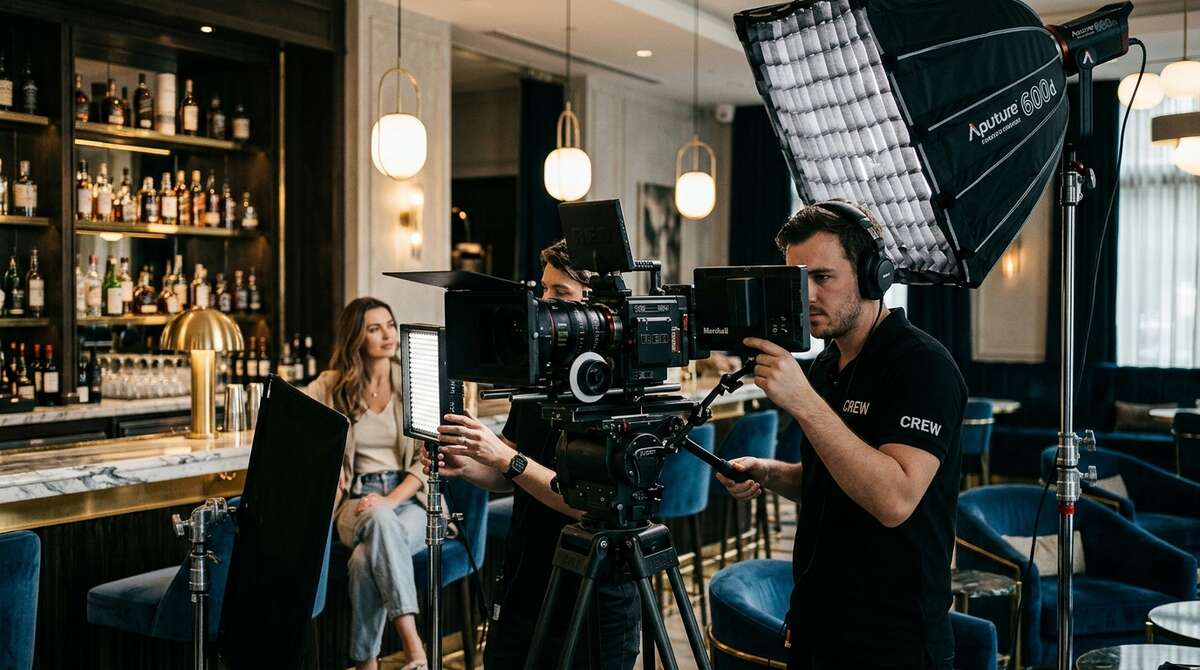
Businesses increasingly need both still photography and video content. A corporate branding session may require executive portraits alongside interviews. A hospitality production may combine interior photography with cinematic footage. An automotive campaign may need detailed photographs and short-form promotional video.
Coordinating these services can create a more consistent visual identity and reduce duplicated production planning. However, photography and video have different technical and scheduling requirements. Lighting, audio, camera movement and production timing must be considered together.
Ask whether the photographer or production studio has dedicated video capabilities and how both disciplines will be coordinated. When planned properly, integrated video production and photography can create a more versatile library of marketing assets.
Review Retouching, Delivery and Asset Management
The production process continues after the photography session. Confirm how proofs will be delivered, who selects the final images and what level of editing is included.
Retouching may involve color correction, image cleanup, background adjustments or more extensive compositing. For product photography, consistent color and accurate representation are particularly important. For corporate portraits, establish expectations for natural-looking retouching.
Request high-resolution master files when included in the agreement, along with optimized versions for digital use. Discuss file naming, delivery methods, storage and how long the photographer retains the original files. Organized assets make it easier to reuse photography across future campaigns.
Choose a Creative Partner Who Understands Your Brand
Technical skill is essential, but successful commercial photography also depends on collaboration. A strong photographer should ask questions about your business, audience and objectives.
They should be able to explain their creative approach, anticipate production challenges and communicate clearly throughout the assignment. The most valuable creative partnerships combine artistic judgment with an understanding of business objectives.
Hiring a Commercial Photographer on the Monterey Peninsula
Commercial photography in Monterey, Carmel and the surrounding Peninsula comes with production considerations that aren't always obvious when planning a shoot.
Coastal light and weather. The marine layer can change lighting conditions significantly throughout the day. Fog may lift or roll back in as a shoot progresses. Experienced photographers plan around these conditions and build flexibility into outdoor schedules.
Monterey Car Week. Automotive photography and event production require early planning during Car Week. Access, credentials, locations and production schedules should be coordinated well in advance, especially for major automotive events and private gatherings.
Permits and location access. Commercial photography at beaches, parks, public properties and private venues may require permits, location agreements or insurance documentation. Requirements vary by jurisdiction and property, so confirm them before scheduling.
Hospitality production schedules. Restaurants and hotels often benefit from photography planned around guest activity, service periods and seasonal demand. Scheduling a restaurant shoot between meal services, for example, can provide better control over styling and access without disrupting operations.
A photographer familiar with the Monterey Peninsula can help anticipate these conditions and coordinate production more efficiently.
A Practical Checklist Before Hiring
Before approving a commercial photography proposal, make sure you can answer these questions:
Does the photographer have relevant experience and complete examples of comparable work?
Is the creative direction aligned with your brand?
Are the shot list, schedule and production responsibilities clearly defined?
Does the quote explain all deliverables and potential additional costs?
Are licensing terms and usage permissions documented?
Have website, mobile, advertising and print requirements been considered?
Are editing expectations, delivery timelines and file formats agreed upon?
A clear selection process helps prevent misunderstandings and gives the shoot a clear plan.
Photography That Works Beyond the Shoot
The right commercial photographer delivers more than attractive images. The final photographs should represent your business accurately, strengthen your visual identity and support how you communicate with customers.
At eLab Communications, photography is part of a broader creative and digital practice that includes branding, website development, content strategy and video production. Our experience with hospitality properties, Monterey Car Week and special events informs how we plan photography for real-world campaigns. We can coordinate the creative direction and production across multiple formats and channels.
Whether you're planning corporate portraits, product photography, hospitality imagery, automotive coverage or a coordinated photography and video campaign, we can help develop a creative approach aligned with your objectives.
eLab Communications
Digital Agency
A full-service digital agency specializing in website design, SEO, and digital marketing.
About eLab