
Analytics & Optimization
Data is most useful when it helps answer a business question. eLab connects analytics, conversion tracking and ongoing optimization so digital decisions can be based on how people actually use the experience.
Measure. Understand. Improve.
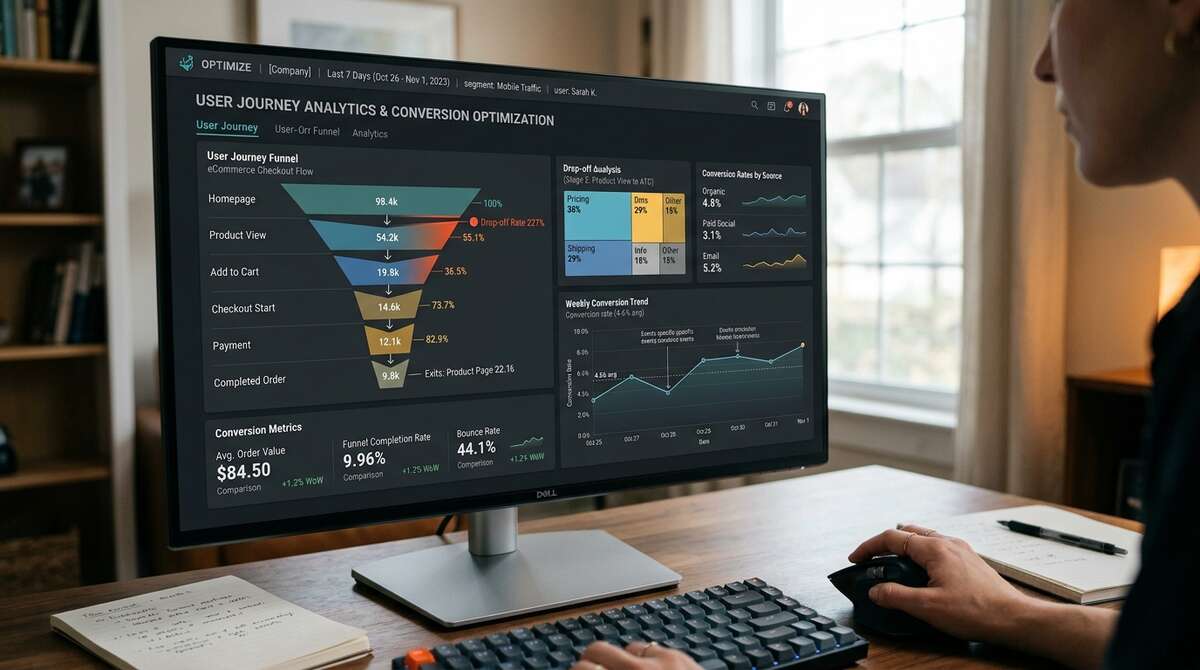
Measure. Understand. Improve.
Data is most useful when it helps answer a business question. eLab connects analytics, conversion tracking and ongoing optimization so digital decisions can be based on how people actually use the experience.
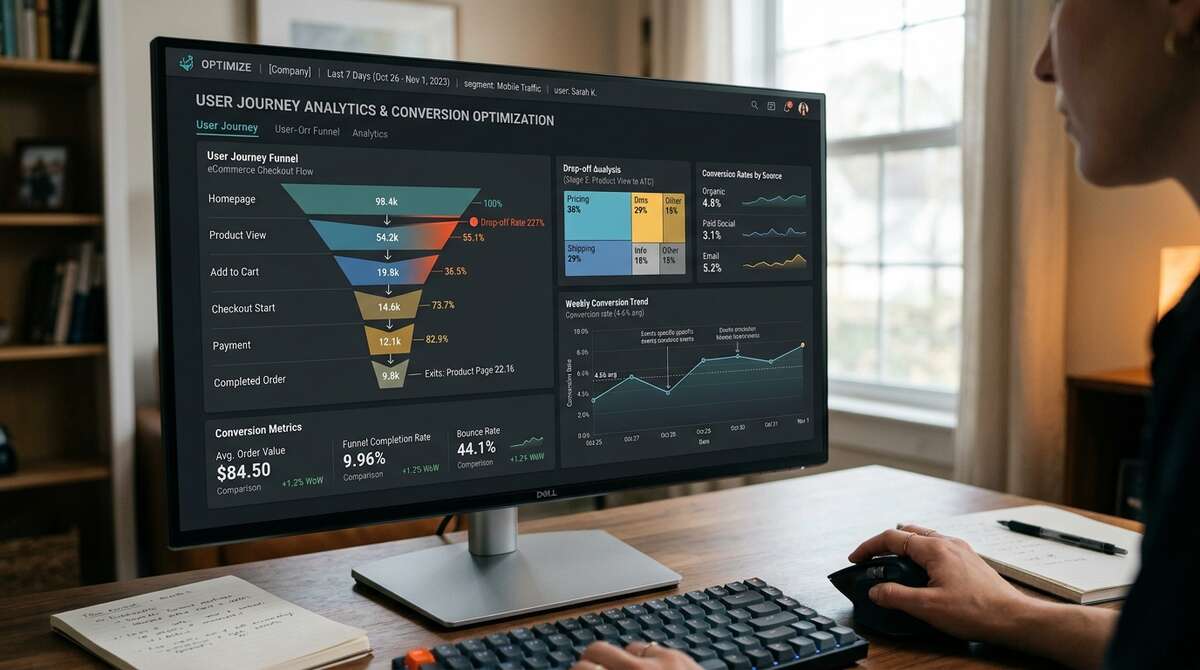
Measure What Matters
The right metrics depend on what the business is trying to accomplish. Traffic alone is rarely enough. Measurement should connect digital activity to meaningful customer behavior.
Leads
Contact, quote and inquiry submissions.
Reservations
Dining, events and appointments.
Registrations
Event attendance, webinars and programs.
Purchases
E-commerce and transaction data.
Engagement
Video views, content consumption and deep exploration.
Audience Growth
Email subscriptions and new returning users.
The Right Information in One Place.
When ongoing visibility is important, dashboards can consolidate relevant website, campaign, search and conversion information into a more useful view.
Website
Traffic, landing pages, and user engagement.
Search
Organic visibility and query performance.
Campaigns
Paid media metrics and channel attribution.
Leads
Form submissions and qualified inquiries.
Commerce & Events
Purchases, revenue, registrations and ticket conversion.
Content
Video views, article engagement and resource downloads.
Different Businesses Need Different Metrics.
Metrics are highly contextual depending on the industry and goals.
Hospitality
Reservations, private dining inquiries, menu engagement and location actions.
Tourism
Content discovery, partner engagement, events and advertiser activity.
Automotive
Vehicle engagement, event registrations, inquiries and campaign response.
Events
Registration, ticket conversion, campaign traffic and guest communication.
E-Commerce
Product views, cart activity, checkout and purchases.
Associations & Nonprofits
Membership, donations, program engagement, registrations and resource use.
Start With the Question.
Good analytics begins by deciding what you need to understand. The tracking implementation should follow the business question—not the other way around.
- •Which pages generate qualified inquiries?
- •Where do users abandon the conversion path?
- •Which campaigns create meaningful actions?
- •Which search queries bring the right visitors?
- •Which content contributes to deeper engagement?
- •Where does mobile behavior differ from desktop?
Track the Actions That Matter.
Conversion tracking connects the website or campaign to meaningful customer actions so performance can be evaluated beyond page views.
- •Start a Project
- •Contact Inquiry
- •Studio Inquiry
- •Phone Click
- •Reservation
- •Registration
- •Purchase
- •Download
- •Video Engagement
Understand the Journey. Find the Friction.
Analytics can show where people arrive, what they explore, which paths lead to action and where users leave before completing an important step. Discover → Explore → Decide → Act
- •Landing Pages
- •Traffic Sources
- •Engagement
- •Conversion Paths
- •Exit Points
- •Form Abandonment
- •Registration / Checkout Drop-Off
- •Mobile Friction
Connect Search Visibility to Behavior.
Search data can show how people discover the site, which queries generate visibility and where stronger content or technical improvements may create opportunity.
- •Search Queries
- •Impressions
- •Clicks
- •Landing Pages
- •Organic Conversions
- •Indexing Issues
See What the Campaign Is Actually Doing.
Campaign reporting should connect media, creative and landing-page performance to the action the campaign was built to create.
- •Campaign Traffic
- •Cost per Meaningful Action
- •Landing-Page Conversion
- •Paid Search Performance
- •Paid Social Performance
- •Registration / Lead / Purchase Results
Learn Which Content Earns Attention.
Analytics can help identify which articles, videos, social content or project pages attract attention and contribute to deeper engagement or conversion.
- •Content Views
- •Video Engagement
- •Scroll Depth
- •Internal Navigation
- •Related Content Clicks
- •Conversion Contribution
Analytics Should Lead to Action.
Reporting is useful only when it helps determine what should improve next. Optimization turns observed behavior into practical changes across content, UX, campaigns and conversion paths.
- •Navigation
- •Calls to Action
- •Landing Pages
- •Forms
- •Mobile UX
- •Content
- •Campaign Creative
- •Media Allocation
Test Where Testing Is Useful
Important decisions should be informed by real behavior whenever possible.
- A/B Testing
- Message Testing
- CTA Testing
- Landing-Page Iteration
- Creative Testing
Faster Experiences Usually Work Better.
Performance analytics can identify slow pages, oversized media and technical issues that affect usability, search visibility and conversion.
- •Core Web Vitals
- •Page Load
- •Media Performance
- •Mobile Performance
- •Layout Stability
Reporting Should Be Easy to Understand.
A useful report should explain what changed, why it matters and what should happen next—not simply export every metric available.
- •What Happened: Key performance changes.
- •Why It Matters: Business meaning and context.
- •What We Learned: Opportunities or issues.
- •What We Recommend: Practical next steps.
Measurement Should Respect Privacy.
Analytics and advertising technology should be configured with privacy, consent requirements and data minimization in mind. We measure what is useful for the business without collecting unnecessary information.
Related Capabilities
Know What’s Working. Improve What Isn’t.
We can connect measurement to the customer journey, identify where the experience creates friction and prioritize the improvements that matter most.